
 By MADE
Key Takeaways
- Sports stories can turn abstract leadership ideas into memorable, practical conversations.
- Clear roles, trust, timely feedback, and recovery habits matter in workplaces as much as they do in competitive teams.
- A successful leadership event focuses on one outcome and gives attendees an action they can use immediately.
- Sports examples work best when they are explained in plain language and connected to real audience challenges.
Table Of Contents
- Why Sports Stories Work In Leadership Settings
- Choose The Right Leadership Message
- Sports Lessons That Transfer To The Workplace
- Build A Useful Leadership Event
- Avoid Common Mistakes
- Measure What Attendees Take Away
- Common Questions
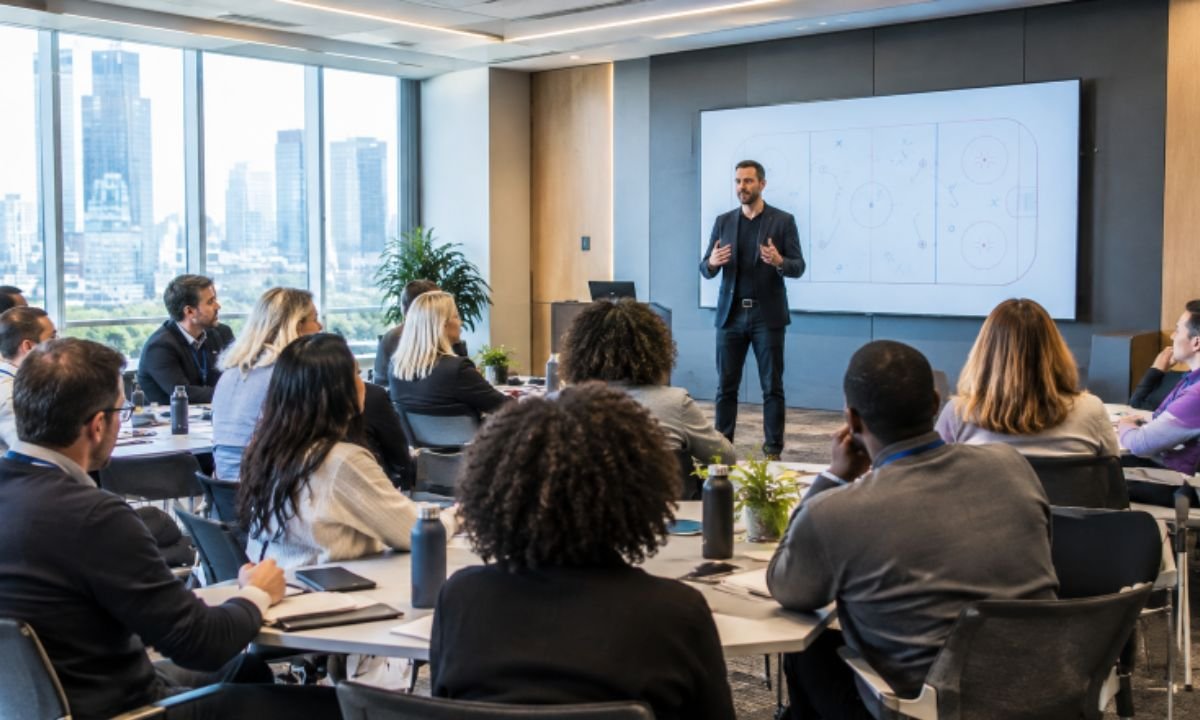
Leadership lessons from sports are valuable because they make pressure, preparation, mistakes, and teamwork easy to picture. An event organizer who books retired NHL players available for keynotes can use firsthand stories to start a broader discussion about how people communicate, respond to adversity, and contribute to a shared goal.
The strongest sports-based leadership sessions do not depend on celebrity alone. They connect a specific moment, such as a difficult loss, a change in strategy, or a conflict among teammates, to a challenge the audience recognizes from its own work. The story creates interest, but the practical lesson is what makes the session worthwhile.
Why Sports Stories Work In Leadership Settings
Sports offer a familiar setting in which roles are visible, and consequences are immediate. A team has to prepare, make decisions with limited information, adjust when conditions change, and review what happened afterward. Those same patterns appear in project teams, classrooms, nonprofits, healthcare settings, and growing businesses.
Stories also provide a lower-pressure way for people to discuss difficult workplace topics. Rather than opening with a complaint about poor communication, a leader can describe a team that failed to share important information at the right time. That distance can help participants consider their own habits without becoming defensive.
Trust is especially important in both settings. Guidance on psychological safety at work emphasizes that people need to be able to raise concerns, ask for help, and discuss mistakes constructively. A sports example can make those behaviors easier to identify and practice.
Choose The Right Leadership Message
Before selecting a speaker, story, or activity, decide what should change after the session. Trying to cover every leadership skill can leave attendees inspired but uncertain about what to do next. One clear outcome gives the event direction.
Possible Event Goals
- Improve communication between departments.
- Help new managers give clearer feedback.
- Rebuild trust after a period of change.
- Support morale during a demanding season.
- Give students, coaches, or employees a usable leadership habit.
For example, an organization dealing with missed handoffs may focus on accountability and communication. A company preparing for a major change may instead focus on resilience and how teams recover after plans shift. The message should reflect what the audience needs now, not simply the most popular sports topic.
Sports Lessons That Transfer To The Workplace
Clear Roles Reduce Confusion
People work more effectively when they know what they own, where they should support others, and who makes the final decision. Role clarity does not mean every task is rigid. It means the team understands responsibilities before pressure exposes uncertainty. The basic principles of team building similarly include aligning around goals and reducing role ambiguity.
Trust Makes Communication Faster
A team loses time when people hide concerns, avoid hard conversations, or wait for permission to raise a problem. Leaders build trust through consistent behavior: keeping commitments, admitting errors, listening carefully, and addressing issues directly. Trust does not remove disagreement. It makes disagreement more productive.
Feedback Should Be Timely And Useful
A post-game review offers a useful model for workplace debriefs. Instead of waiting until a formal review cycle, leaders can ask a few focused questions soon after a project milestone:
- What worked well?
- Where did the process create friction?
- What should we change next time?
- Who needs support before the next step?
Resilience Needs A Process
Resilience is not a command to push harder after a setback. Teams need time to assess what happened, regain focus, determine what is controllable, and take the next useful action. Leaders can support this process by discussing setbacks without blame and recognizing the learning that follows a difficult result.
Team Culture Shows Up In Small Choices
Culture is shaped in everyday moments. It appears in who gets heard in meetings, whether commitments are honored, how credit is shared, and how poor conduct is handled. Leaders strengthen culture when they reinforce the behavior they want repeated, not just the outcome they want achieved.
Build A Useful Leadership Event
- Define the audience. Consider participants’ experience, responsibilities, and current challenges.
- Set one clear goal. Identify the habit, decision, or conversation the session should encourage.
- Choose a relevant theme. Teamwork, preparation, accountability, recovery, and communication are useful starting points.
- Match the speaker to the message. Relevant experience matters more than name recognition alone.
- Add interaction. Use a poll, short reflection, case example, or small-group discussion.
- End with an action plan. Ask each attendee to choose one behavior to practice during the following week.
A simple 50-minute format can include five minutes for the welcome and goal, 15 minutes for a story, 15 minutes for practical lessons, 10 minutes for discussion, and five minutes for personal commitments. The structure leaves room for inspiration while keeping the session grounded in application.
Avoid Common Mistakes
Relying On Motivation Alone
Motivation can create energy, but energy fades without a next step. Pair each major point with a behavior that attendees can try in a meeting, project review, or one-on-one conversation.
Using Sports Jargon
Not everyone follows a sport or understands its terminology. Explain the situation in plain language before drawing the workplace connection, so the lesson remains inclusive.
Focusing Only On Winning
Winning is an easy ending, but it is not the only useful lesson. Preparation, ethical choices, teamwork, recovery, and steady improvement often provide more meaningful examples for a workplace audience.
Skipping Follow-Up
An event should not be the final step. Send participants a recap, discussion prompts, or a reminder of the action they selected. Managers can also revisit the theme in team meetings to turn a good idea into a shared practice.
Measure What Attendees Take Away
Event measurement can stay simple. Ask participants whether the session was useful, what action they plan to take, and what topic needs more attention. A follow-up message several weeks later can ask whether they used their action and what made it easier or harder to sustain.
Organizers can also compare participation in discussions, feedback from managers, and the quality of participants’ commitments. The goal is not to force a complex scorecard. It is to determine whether the event started better conversations and encouraged behavior that supports the team’s purpose.
Common Questions
Can Sports Leadership Lessons Help People Who Do Not Play Sports?
Yes. The lesson should center on shared experiences, such as pressure, preparation, communication, or recovery, rather than requiring knowledge of a game.
What Makes A Sports Story Useful?
A useful story includes a challenge, a meaningful decision, and a clear connection to the audience’s work.
How Long Should A Leadership Session Be?
Many sessions fit well into 30 to 60 minutes. The best length depends on the setting, the amount of interaction, and whether participants need time to practice a new skill.
Should The Event Include A Famous Athlete?
Not necessarily. A speaker who understands the audience and can translate experience into practical guidance may be more valuable than a well-known name with a generic message.
Conclusion
Sports leadership stories can help teams talk openly about trust, preparation, feedback, and resilience. The most effective events connect a memorable experience to a useful workplace habit. With a focused message, relevant examples, and a clear action step, organizers can create leadership sessions that continue to influence how people work together after the event ends.