
 By MADE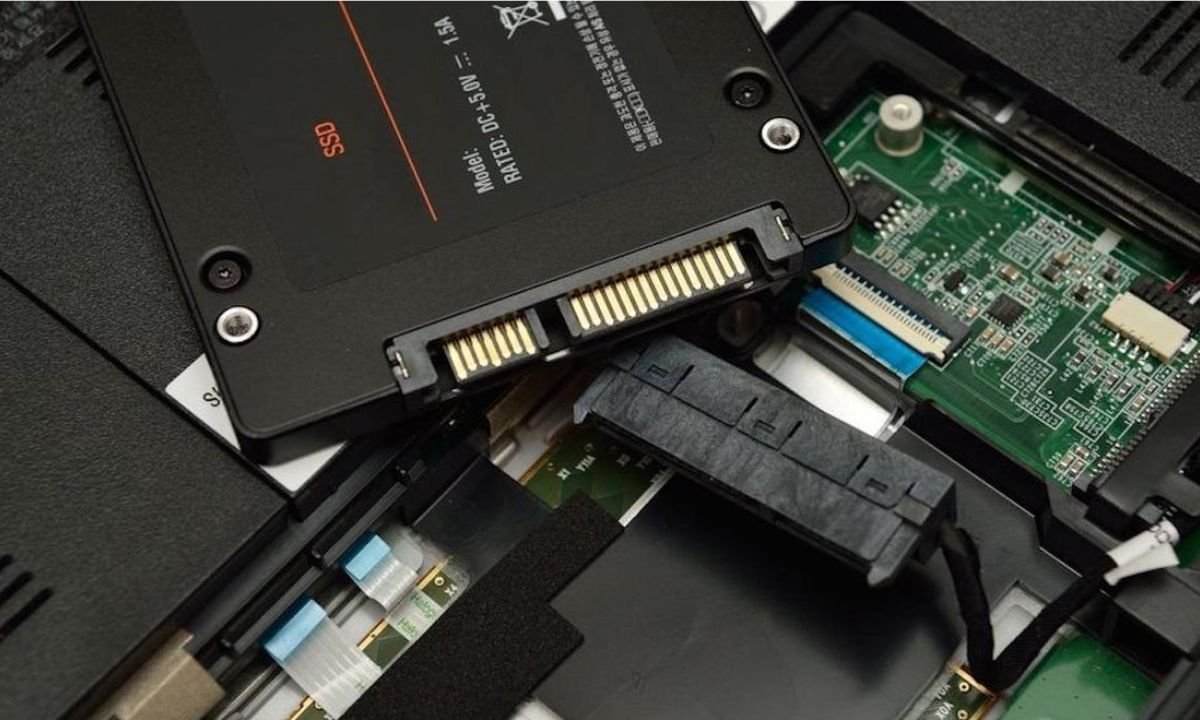
Nobody talks about storage the way they talk about CPUs or GPUs. It’s the quiet part of the stack, easy to overlook right up until it becomes the reason a service falls over during peak traffic. Storage is where a lot of cloud performance problems actually live, and it’s also where a lot of them get fixed, often just by moving off spinning disks and onto something faster.
That shift toward solid-state storage has been happening for years now, but its effect on how cloud infrastructure actually scales and holds up under pressure still doesn’t get talked about nearly enough.
Why Storage Became a Scalability Bottleneck
Traditional hard drives read and write data mechanically, using a spinning platter and a physical arm that moves across it. That worked fine for years, but cloud workloads changed the math. Databases handling thousands of concurrent queries, applications spinning up and tearing down instances constantly, workloads that need data available in milliseconds, not tens of milliseconds, mechanical storage simply can’t keep pace with any of that at scale.
The bottleneck shows up exactly when it hurts most: during traffic spikes, when a service needs to scale up fast and storage becomes the thing holding everything else back. A cloud environment can have plenty of CPU and memory headroom and still choke because storage can’t feed data to the rest of the system fast enough.
This is exactly why cloud providers and infrastructure teams have moved so aggressively toward solid-state technology. Choosing among the top solid-state drives available today isn’t just a performance upgrade for many workloads anymore; it’s what separates infrastructure that scales cleanly from infrastructure that buckles the moment demand climbs.
How SSDs Actually Change Cloud Performance
The difference between mechanical drives and solid-state storage isn’t incremental. It’s a fundamentally different way of accessing data, and that shows up everywhere in a cloud environment.
- Read and write speeds jump dramatically, cutting the time an application waits on storage before it can respond to a request
- Latency drops sharply, which matters enormously for databases and applications where every millisecond of delay compounds under load
- IOPS capacity increases by orders of magnitude, letting infrastructure handle far more simultaneous read and write operations without choking
- Reliability improves too, since there are no moving parts to wear out or fail under constant mechanical stress
None of these are marginal gains. Together, they change what a piece of infrastructure is actually capable of handling.
The Direct Link to Cloud Scalability
Scalability isn’t just about adding more servers when demand grows. It’s about whether every layer of the stack, storage included, can actually keep up once that demand hits.
Faster Instance Provisioning
Spinning up new cloud instances quickly during a traffic surge depends heavily on how fast storage can read and write data during that provisioning process. Slow storage turns what should be a near-instant scale-up into a bottleneck that costs a service real uptime during exactly the moment it can least afford one.
Handling Concurrent Workloads
Cloud environments routinely run dozens or hundreds of workloads on shared infrastructure at once. SSD-backed storage handles that concurrency far better than mechanical drives, since multiple simultaneous read and write requests don’t compete for a single physical read head the way they do on spinning disks.
Supporting Auto-Scaling Without Storage Lag
Auto-scaling only works well if storage can keep pace with the sudden demand that triggers it. A system that scales its compute layer instantly but stalls on storage still ends up degraded, even if the dashboard says everything scaled successfully.
Reliability: The Other Half of the Equation
Scalability gets most of the attention, but reliability is where solid-state storage arguably makes the bigger difference. Mechanical drives fail more often, specifically because they have physical, moving components. Solid-state drives don’t have that failure mode, and that changes the reliability math across an entire infrastructure stack.
This matters even more for infrastructure that needs to stay available around the clock. A properly configured cloud server SSD setup reduces the risk of storage-related downtime significantly, which for businesses running customer-facing applications isn’t a nice-to-have; it’s the difference between staying online during a bad week and losing customers because of one.
What This Means for Infrastructure Decisions
Choosing storage for cloud infrastructure isn’t really about chasing the fastest drive on a spec sheet. It’s about matching storage performance to the actual workload. High-transaction databases need something different than static file storage does, and treating every workload the same tends to leave performance on the table somewhere.
Teams that get this matching right end up with infrastructure that scales smoothly during traffic spikes and stays reliable through the kind of sustained load that would expose weaker storage fast.
Final Thoughts
Solid-state drives have quietly become one of the more important factors in how well cloud infrastructure actually performs under real-world conditions. They shape how fast new resources come online, how many concurrent workloads a system can handle, and how much downtime a business can expect to avoid over the course of a year.
Infrastructure teams that treat storage as a core design decision, not an afterthought bolted onto a server spec sheet, tend to build systems that scale cleanly and stay online when it matters most. That’s the thinking behind Cloud Ninjas, which builds infrastructure around storage performance that actually matches what modern cloud workloads demand.