
 By Siam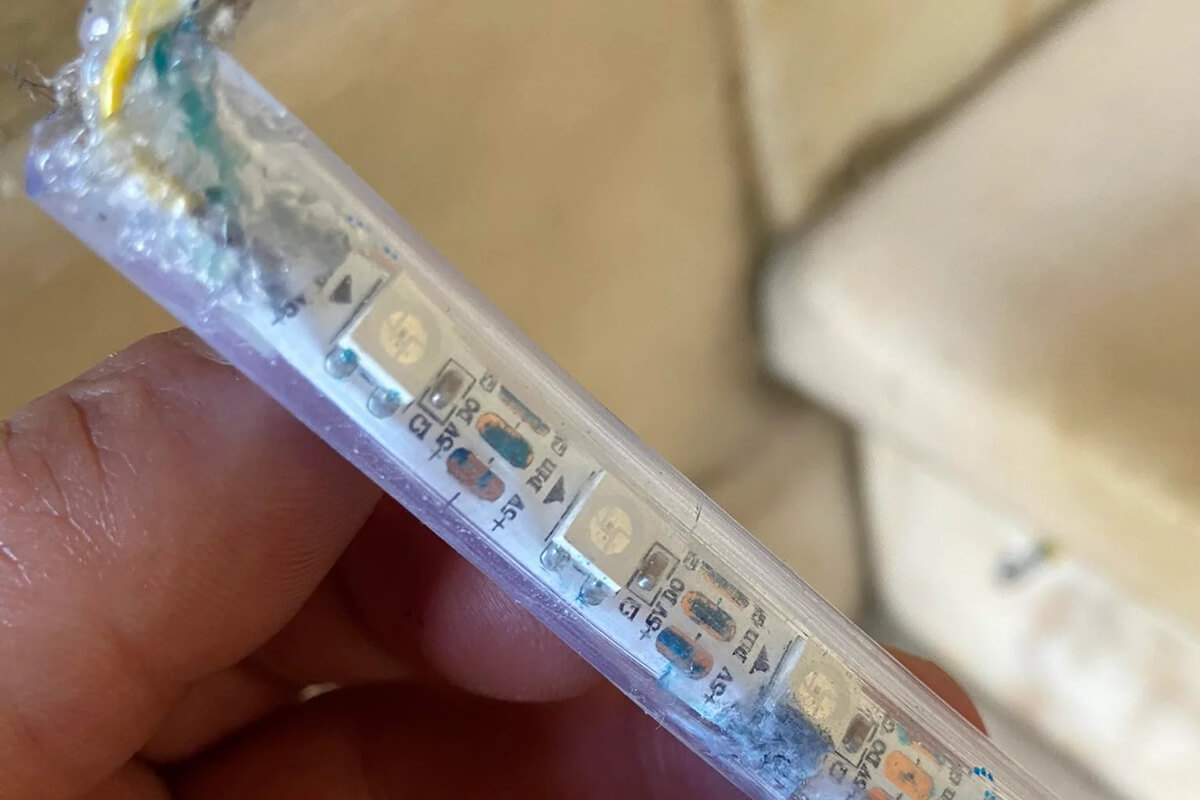
Introduction: Outdoor LED Failures Are Rarely “Unexpected”
When outdoor LED lighting systems fail, the failure is often described as “unexpected,” “unlucky,” or “a defective batch.” In reality, most outdoor LED failures are highly predictable.
Engineers, installers, and maintenance teams see the same patterns repeatedly:
- Water ingress at predictable weak points
- Premature lumen degradation
- Color shift after one or two seasons
- Sudden driver failure following heavy rain or temperature changes
These are not random events. They are the direct result of incorrect assumptions about waterproofing, IP ratings, and environmental exposure.
This article examines outdoor waterproof LED failures from a failure-analysis perspective, breaking down the most common root causes and explaining how they can be avoided through better selection and system-level thinking.
Failure Starts Long Before the Lights Turn On
Most outdoor LED failures begin during the specification stage, not during operation.
Common early-stage mistakes include:
- Treating all outdoor environments as identical
- Selecting products based on IP numbers alone
- Assuming higher IP ratings eliminate all risk
- Ignoring installation orientation and drainage
Once these decisions are locked into a project, failure becomes only a matter of time.
Water Is Not the Only Enemy: Moisture and Condensation
A common misconception is that waterproofing only needs to block liquid water.
In reality, moisture vapor and condensation are among the most destructive forces in outdoor LED systems.
How Condensation Causes Failure:
- Temperature changes create internal pressure differences
- Moist air enters through micro-gaps
- Moisture condenses inside sealed housings
- Corrosion forms on PCB traces and solder joints
Ironically, over-sealed products are often more vulnerable to condensation-related failures than properly ventilated designs.
The “IP68 Everywhere” Mistake
One of the most common failure patterns comes from using IP68-rated products in environments where they are not needed.
Why This Causes Problems:
- Fully potted designs trap heat
- Elevated internal temperatures accelerate LED degradation
- Resin materials age and crack under UV exposure
- Repairs become impossible
In many cases, these systems fail earlier than equivalent IP65 or IP67 systems used correctly.
Maximum waterproofing does not equal maximum reliability.
Ground-Level Failures: Predictable and Preventable
Ground-level installations account for a disproportionately high number of outdoor LED failures.
Typical Symptoms:
- Flickering after rain
- Partial section failure
- Corrosion at connectors
- Rapid brightness loss
Root Causes:
- Temporary water pooling underestimated
- Incorrect IP rating selection
- Poor drainage design
- Cable entry points facing upward
These failures are rarely due to product defects. They are the result of environmental misclassification.
Connectors and Cable Entries: The Weakest Points
In post-failure inspections, water ingress is most commonly found at:
- Cable exits
- End caps
- Connector junctions
Even when LED strips themselves remain intact, connectors often fail first.
Higher IP ratings offer no protection if connectors are not equally rated and properly installed.
Installation Orientation Is a Silent Risk Factor
Many outdoor LED products pass IP tests in controlled conditions but fail due to real-world installation orientation.
Examples:
- Horizontally mounted fixtures trap water
- Downward-facing cable exits allow water migration
- Enclosures without drainage accumulate moisture
These failures are not visible on datasheets but are well known to field technicians.
Thermal Stress: The Invisible Failure Accelerator
Heat is the primary factor that determines LED lifespan.
Effects of Excessive Heat:
- Lumen depreciation accelerates
- Color consistency deteriorates
- Driver components degrade
- Seal materials harden and crack
Over-waterproofed products often run hotter, creating a feedback loop where thermal stress leads to seal failure, which then allows moisture ingress.
Seasonal Cycling and Material Fatigue
Outdoor environments subject lighting systems to constant expansion and contraction.
Contributing Factors:
- Day–night temperature swings
- Seasonal climate changes
- UV exposure
- Material incompatibility
Over time, these stresses create micro-cracks that allow moisture to penetrate, even in products that initially passed IP tests.
Why Many Failures Occur After 6–18 Months
A common pattern in outdoor LED projects is delayed failure:
- Year 1: Appears successful
- Year 2: Increasing failures
- Year 3: Widespread degradation
This timeline corresponds closely with:
- Seal aging
- Thermal fatigue
- Condensation accumulation
Failures that appear “sudden” are usually the final stage of long-term degradation.
The Misunderstood Role of IP Ratings in Failure Prevention
IP ratings are often misunderstood as guarantees. They are not.
IP tests:
- Do not account for aging
- Do not include UV exposure
- Do not simulate years of thermal cycling
This is why understanding application-specific IP usage is essential when trying to avoid failures.
A clear explanation of how different IP levels perform in real outdoor environments—and where their limitations lie—is outlined in this reference on best outdoor waterproof LED lights, which focuses on preventing exactly the types of failures discussed here.
Failure Case Patterns Seen in Outdoor Projects
Across many outdoor projects, failure cases tend to cluster around:
- Over-sealed products used in dry environments
- Under-rated products used at ground level
- Poor connector protection
- Ignoring installation orientation
These patterns repeat regardless of brand or region.
Risk Avoidance Starts With Exposure Analysis
Avoiding failure requires a shift in mindset:
- From “maximum protection”
- To “accurate protection”
Key Questions to Ask:
- What is the worst realistic exposure scenario?
- Is immersion possible, or just splashing?
- How will heat escape?
- Can moisture drain or evaporate?
Correct answers to these questions prevent most outdoor failures.
Maintenance Strategy as a Risk Control Tool
Designing for maintenance reduces long-term risk.
Systems that:
- Allow section replacement
- Use standardized connectors
- Enable inspection
Are far less likely to experience catastrophic failure.
Maintenance-friendly design is often more valuable than extreme waterproofing.
Redefining Reliability in Outdoor LED Systems
Reliable outdoor LED systems are not those that attempt to eliminate all risk—but those that manage risk intelligently.
This means:
- Accepting that some exposure exists
- Designing systems that tolerate it
- Avoiding unnecessary complexity
Reliability comes from balance, not extremes.
Conclusion: Outdoor LED Failures Are Mostly Preventable
Most outdoor waterproof LED failures are not caused by bad luck or poor manufacturing.
They are caused by:
- Incorrect assumptions
- Misapplied IP ratings
- Ignored installation realities
By understanding how and why failures occur, designers and buyers can dramatically reduce risk and extend system lifespan.
In outdoor lighting, failure is rarely mysterious. It is usually engineered—long before installation begins.